For decades, pork producers have dreaded the arrival of summer heat. Standard industry wisdom held that seasonal hyperthermia was a temporary nuisance: sows ate less, took longer to farrow, and struggled with summer infertility, but operations bounced back once temperatures dropped.
However, a wave of recent scientific breakthroughs reveals that the damage runs far deeper than a single bad season. Researchers have uncovered a far more insidious threat known as In Utero Heat Stress (IUHS), a phenomenon where heat-stressed pregnant sows pass on permanent, unerasable biological damage to their unborn piglets.
"Far from a temporary prenatal setback, heat stress acts as an epigenetic and physiological reprogramming event," researchers noted in recent findings. "The offspring carry these invisible biological scars throughout their entire postnatal lives."
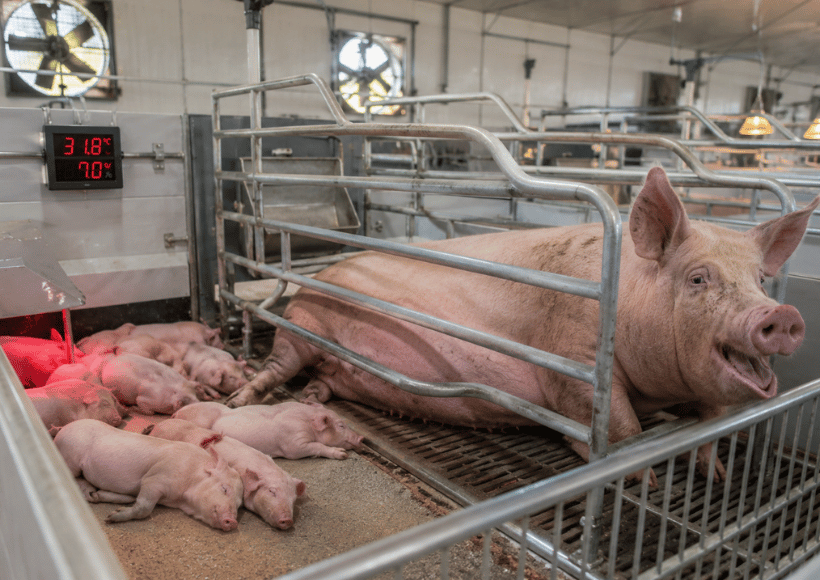
Because swine lack functional sweat glands and possess a low lung-to-body weight ratio, they are exceptionally vulnerable to thermal strain. When ambient barn temperatures cross the threshold of 24°C to 25°C (75°F–77°F), a gestating sow’s core body temperature begins to surge.
To cool itself down, the sow's central nervous system initiates a massive circulatory shift: it restricts blood flow to internal organs and redirects it to the skin's surface to dissipate metabolic heat.
This survival response causes severe placental insufficiency. Uterine blood flow drops dramatically, depriving developing fetuses of vital oxygen (hypoxia) and essential nutrients like glucose and amino acids. Cellular stress and programmed cell death (apoptosis) break down the placental interface, forcing the fetus into survival mode and permanently altering its developmental trajectory.
The most immediate financial blow to commercial pork operations comes at the packing plant. Because primary and secondary muscle fibers are formed strictly before birth, nutrient deprivation during gestation permanently lowers an animal's capacity to build lean muscle.
Mapping genome-wide DNA methylation in swine, landmark research by Castro Durval & Brito (2026) identified persistent epigenetic changes in genes regulating lipid metabolism and cellular stress (such as ARID1B, DUSP4, SMPD3, and OSBPL8). These altered genetic "switches" remain active well into the finishing phase of growth.
Regardless of how comfortable the finishing barn is post-birth, an IUHS pig's body prioritizes fat over lean tissue. At slaughter, these pigs yield smaller loin eye areas and thicker backfat, requiring more feed to deposit low-value fat rather than high-value lean meat.
The biological fallout also cripples an animal's health profile. Hypoxia in the womb damages the structural integrity of the fetal mucosal barrier, leaving piglets born with a condition known as leaky gut.
This compromised intestinal lining allows bacteria and endotoxins to slip into systemic circulation, locking the pig into a perpetual state of subclinical inflammation.
Multi-university pathogen challenge trials led by Johnson et al. (2026) revealed that IUHS pigs possess a pathologically hyper-reactive innate immune system:
Rather than protecting the pig, this hyper-reactive immune response burns through valuable calories, creating a continuous drain on the animal's baseline maintenance energy requirements and lowering overall feed efficiency (Gain-to-Feed ratio).
Perhaps the most alarming dimension of IUHS is its ability to undermine future breeding lines, damaging both replacement gilts and terminal boars before they are even born.
When gestating sows suffer heat stress between days 30 and 60 of pregnancy, a vital window for fetal ovarian development, fetal egg cells undergo widespread apoptosis. Because female pigs cannot generate new eggs after birth, the loss is permanent.
Upon entering the breeding herd, these gilts experience lower ovulation rates, smaller overall litter sizes, and elevated pre-weaning mortality. Studies by Safranski et al. (2026) show that IUHS sows frequently wean one fewer piglet per litter throughout their reproductive lives.
Boars exposed to heat stress in utero show a 35% reduction in testicular growth rate, indicating delayed puberty and structural hypoplasia. Once sexually mature, their lifetime semen production capability is heavily diminished, averaging a 24% reduction in total sperm counts.
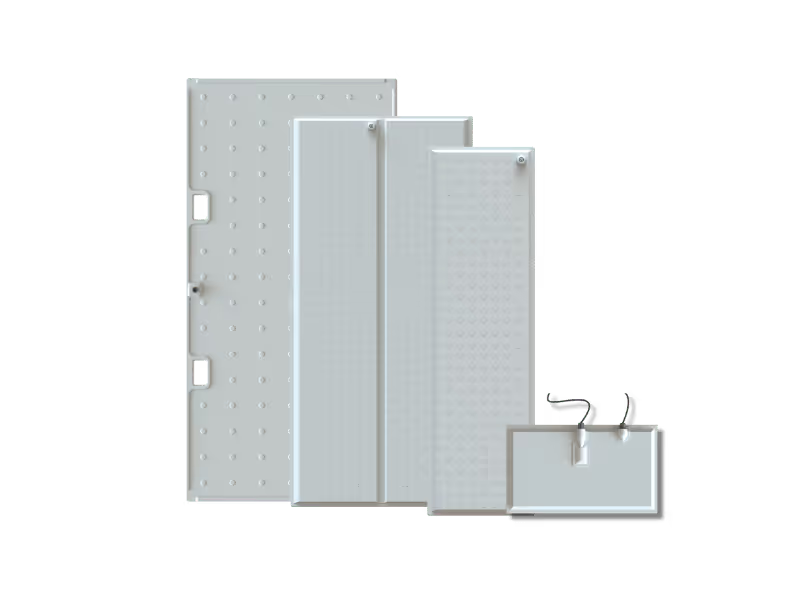
Addressing the multi-million-dollar drain of IUHS requires shifting from reactive, barn-wide ventilation toward targeted interventions: