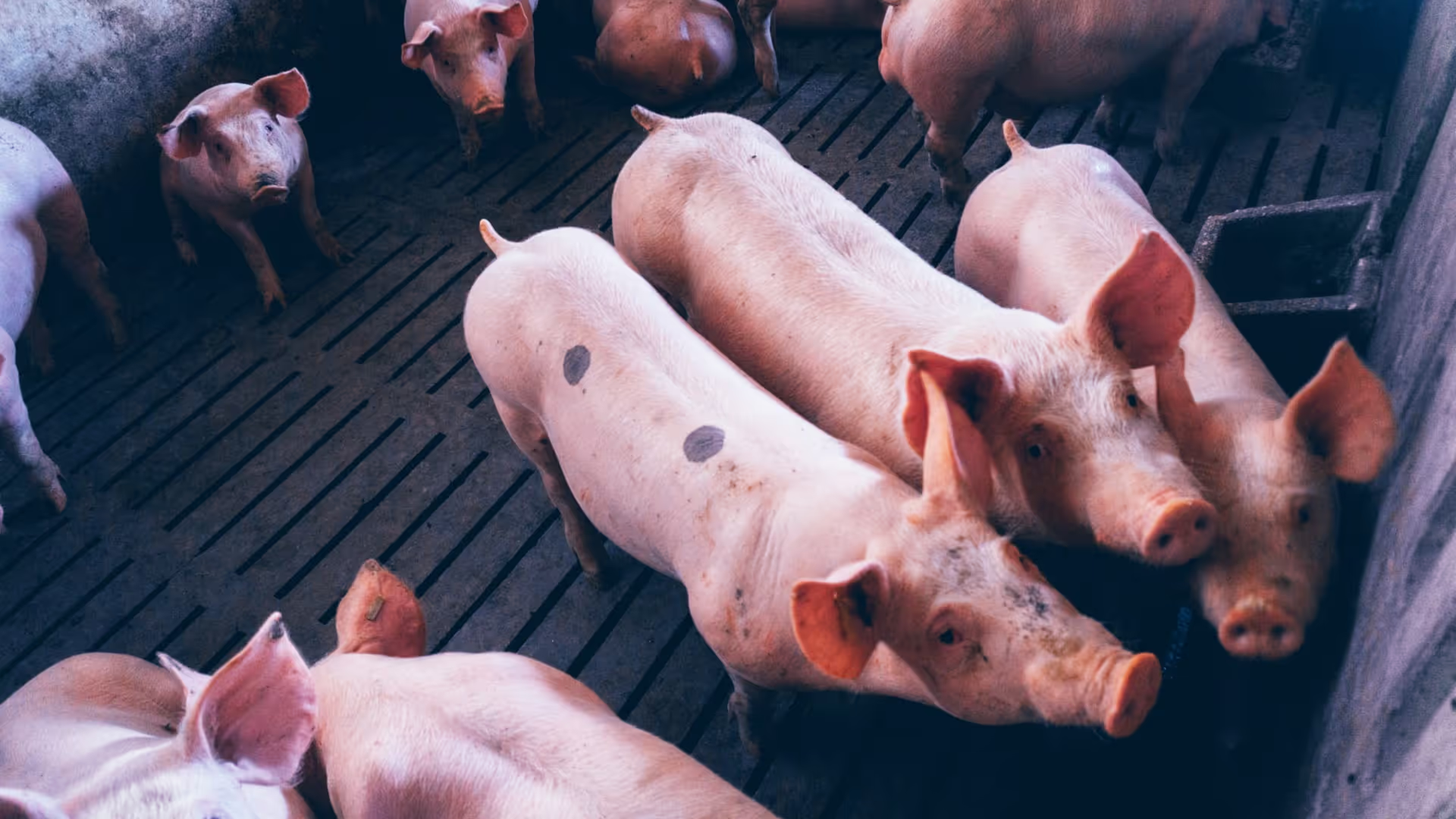
Swine production stands at a critical ethical andstructural crossroads. For decades, the conventional farrowing cratehas optimized piglet survival by physically restricting the sow,effectively decoupling maternal biological drives from commercialoutcomes. However, contemporary ethological research and shifting globalwelfare frameworks are driving a transition toward non-confinementand temporary confinement systems. This paper examines the systemic trade-offsbetween sow behavioural freedom and neonate mortality, evaluates thephysiological impacts of environmental enrichment, and explores how PrecisionLivestock Farming (PLF) technologies act as a vital bridge in thisbehavioural-ecological compromise.
The modern farrowing house represents an acuteconvergence of intensive engineering and animal biology. At its core lies afundamental ethological friction: the spatial and behavioural needsof the periparturient (around birth) sow versus the physicalvulnerability of her altricial (helpless) offspring.
Historically, production systems resolved this tensionthrough absolute spatial containment. The conventional farrowing craterestricts the sow to a footprint roughly matching her body dimensions,prioritizing the mitigation of accidental crushing events. While successful inreducing crushing-induced pre-weaning mortality, this severerestriction prevents the expression of highly motivated, evolutionary maternalbehaviours.
As regulatory frameworks and societal expectations trendtoward higher welfare standards, animal science is forced to look beyondmere survivability, actively redesigning environments to support complexbehavioural phenotypes.
Developing housing alternatives that respect the biologicaldrives of the sow without creating a lethal environment for the litter is aprimary objective in modern swine research. Investigators have categorizedthese designs into two main operational frameworks.
Free farrowing systems operate under the principlethat unrestricted maternal movement is essential for long-term physiologicalhomeostasis. These pens average between 5.5 m² and 6.5 m², giving the sowenough room to turn around, define discrete functional zones (e.g., separatingher dunging area from her resting nest), and interact dynamically with her litter.
Despite substantial improvements in sow cardiovascularfitness, reduced skin lesions, and enhanced maternal satisfaction metrics, thesystem introduces a clear biological risk. Systematic meta-analyses confirmthat entirely unconfined environments correlate with a 14% increase in therelative risk of post-natal piglet mortality, primarily driven by crushingincidents during the high-risk 72-hour post-partum window.
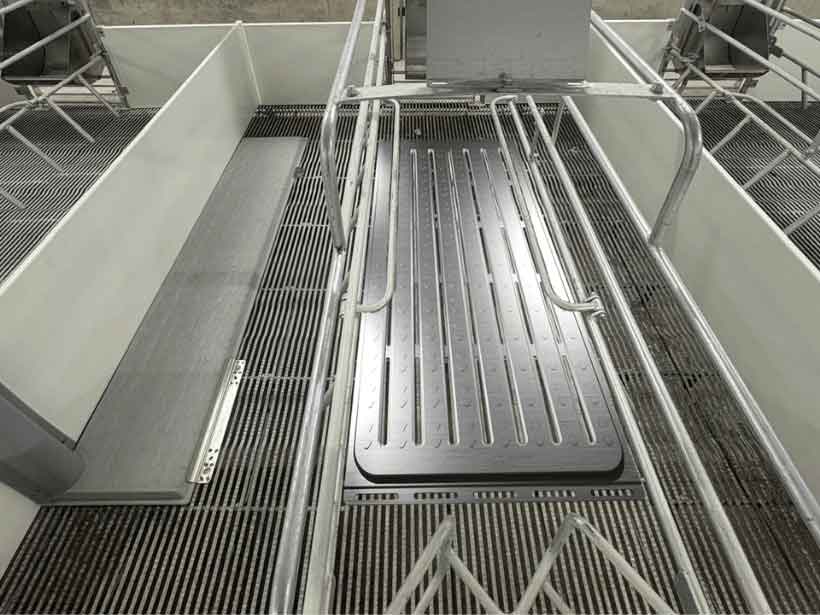
To balance this survival deficit, applied ethologistshave proposed a hybrid approach: temporary or flexible confinement. In these setups, the pen'sphysical architecture adjusts based on the age and agility of the litter.
Longitudinal herd trials show this hybrid strategy capturesthe best of both worlds, reducing the crushing wave while granting fullbehavioural freedom for more than 80% of the nursing period.
A highly predictable hormonal cascade governs the sow'smaternal drive. Approximately 24 hours before parturition, a sharp drop in progesteronecoupled with an increase in prolactin triggers a frantic, pre-programmed nest-building behaviour. In natural environments, asow will walk long distances to gather grass, twigs, and leaves to construct aninsulated, protective structure.
When a barren, concrete farrowing crate blocks this complexbehavioural sequence, the sow experiences severe psychological frustration.This manifests physiologically as:
Providing environmental enrichment, even point-source,non-ingestible materials like chewable wood blocks, natural ropes, or suspendedjute bags, acts as a critical psychological buffer. Sows provided with thesetactile outlets show lower systemic stress indicators, such as reduced chromodacryorrhea(tear staining). Furthermore, early exposure to chewable enrichmentsstimulates proper jaw muscle development in suckling piglets, paving theway for better solid-feed intake post-weaning.
If spatial redesign provides the physical arena for enhancedwelfare, Precision Livestock Farming (PLF) provides the intelligentoversight necessary to manage it safely. By embedding sensor arrays, acousticmonitoring, and computer vision into alternative farrowing pens, scientists canreplace physical restraint with digital vigilance.
Piglet crushing is rarely an instantaneous event; it istypically preceded by a period of entrapment during which the neonate emits high-frequencydistress vocalizations. Advanced PLF systems deploy overhead microphonearrays coupled with real-time audio analysis algorithms. These models isolatethe distinct, high-pitched vocal signatures of a trapped piglet (>3 kHz)from ambient barn noises, such as ventilation fans or feeding machinery. Oncedetected, the system can instantly trigger localized acoustic orvibrational cues to prompt the sow to stand up or alert human stockpersons viamobile applications.
By tracking postural transitions using overhead depthcameras and convolutional neural networks (CNNs), researchers can nowmonitor sow kinematics in real time. Sows transitioning from a standingposition to lateral recumbency (lying on their side) display distinctpreparatory movements.
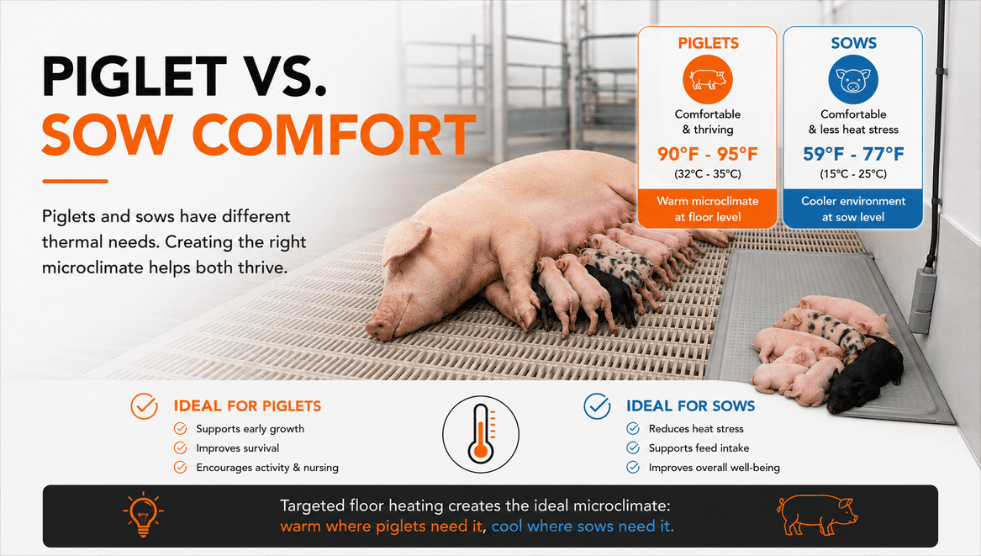
By quantifying these velocity vectors and changes in bodyorientation, predictive algorithms can identify high-risk rolling events beforethey occur. This allows automated systems to activate targeted micro-climates(such as cooling pads under the sow or heat mats in the piglet creep area), safely guidinganimals to their respective zones through thermal preference.
The evolution of swine farrowing systems demonstrates thatanimal welfare and production efficiency need not be a zero-sum game. Thehistorical reliance on absolute physical confinement is giving way to a morenuanced, ecologically integrated model.
Resolving the farrowing dilemma requires a multi-tieredscientific approach: utilizing flexible pen architectures that respect thesow's changing biology, providing structural enrichments to alleviatepsychological stress, and deploying precision technologies to safeguardvulnerable piglets. Moving forward, integrating these engineering solutions withgenetic selection programs focused on maternal attentiveness and pigletvitality will be key to establishing truly sustainable, welfare-alignedproduction systems.