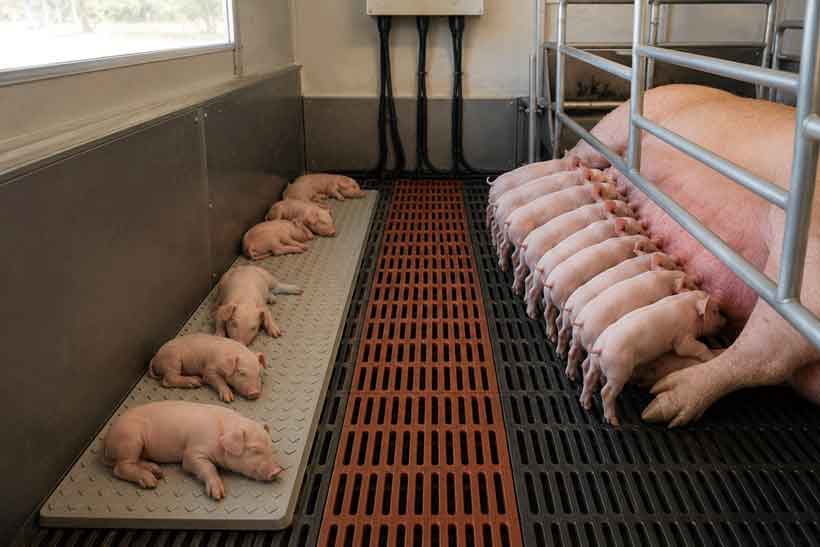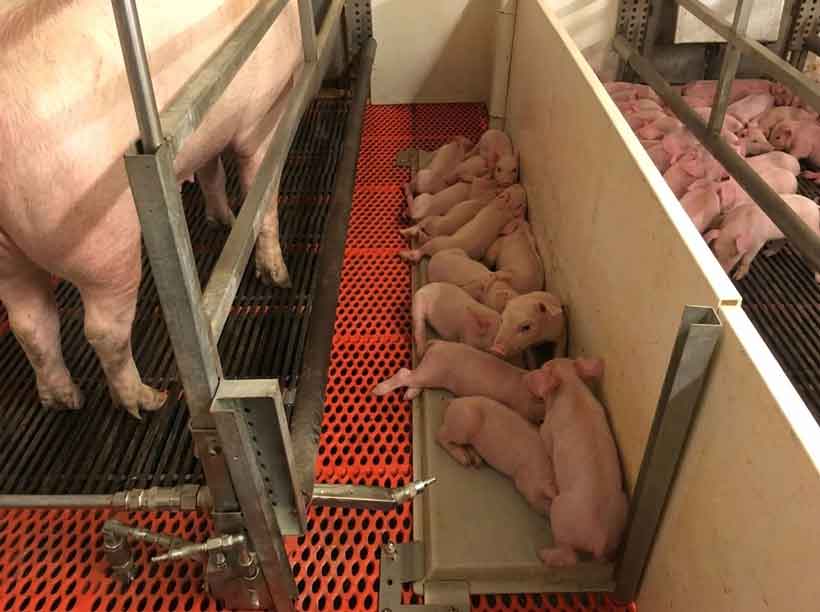
An experiment has unveiled critical insights into the effects of high ambient temperatures on crated sows uring farrowing, raising significant welfare and performance concerns. This study, conducted by R. Muns, J. Malmkvist, M. L. V. Larsen, D. Sørensen, and L. J. Pedersen, aimed to assess how elevated temperatures affect sows’ behaviour, farrowing duration, physiological responses, and overall welfare.
The study’s findings emphasize the detrimental impact of high ambient temperatures on crated sows. Sows exposed to 25°C around farrowing experienced elevated respiration rates, increased rectal and udder temperatures, and reduced feed intake. These factors collectively contributed to lower piglet weaning weights, highlighting the need for better temperature management in farrowing environments.
High environmental temperatures around farrowing lead to significant heat stress in crated sows, negatively affecting their welfare and the performance of their offspring. This study underscores the importance of maintaining optimal temperature conditions to enhance sow health and piglet growth. Continued research and improved temperature management practices are essential for addressing these challenges and ensuring sustainable swine production.