Around the world, rising temperatures are turning breeding boars into one of the most vulnerable animals in the swine herd. Their testes are extremely sensitive to heat and oxidative stress, and when boars are pushed beyond their comfort zone, semen quality and fertility can drop for weeks or even months, with direct consequences for litter numbers and farm profitability. New research from 2025–2026 is finally explaining why this happens at the cellular and molecular level, and what producers can do about it.
For decades, producers and veterinarians have seen seasonal “summer infertility” in boars: lower sperm counts, poorer motility, and more abnormal sperm after hot spells. Modern studies now go beyond simple semen scores, using tools such as single‑cell RNA sequencing, targeted metabolomics, and advanced hormone profiling to map how heat stress disrupts the testis and semen from the inside out. The message is clear: heat stress doesn’t just make boars uncomfortable; it rewires immunity, metabolism, and endocrine function in ways that leave lasting scars on fertility.
One of the most striking recent discoveries comes from a 2025 study on Rongchang boars exposed to controlled heat stress. Researchers found that heat‑stressed boars showed classic signs of strain, higher respiration rates and elevated expression of heat‑shock proteins HSP60 and HSP90, alongside clear damage in testicular tissue. Microscopic examination revealed fibrosis, increased caspase‑3 (a key apoptosis marker), and higher levels of inflammatory cytokines TNF‑α and IL‑1β, all accompanied by a surge in testicular macrophages: in other words, heat‑induced orchitis, or inflammation of the testes.
Single‑cell RNA sequencing added another layer: it showed that CD163‑positive testicular macrophages activated the complement cascade, assembling membrane attack complexes (C5b‑9) that can literally punch holes in cells. The more C5b‑9 was present, the worse the semen looked, C5b‑9 levels were negatively correlated with sperm motility and showed near‑negative correlations with progressive motility and straight‑line velocity (VSL). This is a major mechanistic insight: heat stress can turn the boar’s own immune system against his germ cells, driving inflammatory damage that translates directly into poorer semen quality.
New evidence suggests that the story of heat stress in boars may begin long before they ever step into a stud barn. A 2026 study in the Journal of Animal Science examined boars whose dams were exposed to in‑utero heat stress (IUHS) versus thermoneutral conditions and then combined this with genomic selection for heat tolerance. IUHS boars produced about seven billion fewer sperm cells per ejaculate, equating to roughly 600 fewer artificial insemination doses over a lifetime, a huge reduction in breeding potential for a single animal.pmc.ncbi.nlm.nih+1
Targeted mass‑spectrometry showed that IUHS and genetic heat‑tolerance status reshape the seminal plasma metabolome, particularly short‑chain fatty acids and fatty acid methyl esters. Elevated butyrate concentrations in IUHS boars were moderately negatively correlated with progressive and total motility and normal morphology, while certain fatty acids were positively associated with total sperm number and insemination dose count. Complementary work on IUHS has also reported reduced testicular size at puberty, fewer pre‑spermatogonia, and increased abnormal sperm, driven by disrupted Leydig cell development and altered testicular proteomes. These findings underline that heat stress in pregnant sows can “program” boars for a lifetime of reduced fertility.
Heat stress doesn’t just inflame the testes; it disturbs the boar’s hormonal balance and antioxidant defenses as well. A 2026 pilot study evaluated a complex liposomal supplement containing vitamins A, D₃, E, and C, zinc gluconate, and betaine in boars exposed to moderate heat stress and documented how heat elevated cortisol and thyroxine while lowering testosterone in blood and seminal plasma. Under heat, total sperm number dropped by about 27%, progressive motility declined by over 14%, and several sperm kinematic parameters deteriorated significantly.
Remarkably, supplementation reversed many of these effects: testosterone concentrations rebounded, cortisol and thyroxine fell, total sperm count increased by more than 50%, and motility and kinematic measures improved, along with antioxidant enzymes such as glutathione peroxidase and catalase. In parallel, a 2025 study showed that nicotinamide riboside (NR), a precursor of NAD⁺, can restore testicular NAD⁺ metabolism and improve semen quality while reducing oxidative stress and inflammation in heat‑stressed boars, positioning NAD⁺ boosters as another promising nutritional tool. Together, these mechanistic studies point to endocrine disruption and oxidative damage as central features of boar heat stress, and suggest targeted supplementation may help defend fertility when environmental conditions are suboptimal.
Other recent work has looked at how heat changes sperm motion characteristics, metabolomic profiles, and even what happens during semen delivery to farms. Controlled hot‑room and in‑vitro heat‑shock models show that brief exposure to high temperatures can elevate rectal and scrotal temperatures, reduce total sperm count, and increase abnormal spermatozoa without necessarily changing seminal plasma ions or protein, indicating that germ cells themselves are the primary heat‑sensitive targets. Heat stress can also alter sperm kinematic parameters and metabolites linked to fatty‑acid and amino‑acid metabolism, reinforcing the idea that semen quality is tightly connected to underlying metabolic health under thermal challenge.
Even a temperature rise during semen delivery can be harmful: when semen doses are transported above ideal storage temperatures, studies have observed a shift from early to late apoptosis in sperm, increased expression of pro‑apoptotic markers such as Bax and caspase‑3, and activation of heat‑shock proteins and AMP‑activated protein kinase (AMPK) as sperm attempt to survive. For producers, this means that managing boar comfort in the stud is only half the battle, maintaining thermal control during semen handling and distribution is just as important for preserving fertility.
Taken together, these mechanistic insights send a strong signal to swine producers: boar heat stress is not a minor seasonal nuisance but a complex biological shock that affects immunity, hormones, metabolism, and even developmental programming. Every episode of heat stress risks triggering orchitis, complement‑mediated germ‑cell damage, endocrine imbalance, oxidative stress, and shifts in seminal‑plasma metabolites that show up as fewer doses, lower motility, and more abnormal sperm. With modern studs supplying thousands of progeny per boar each year, protecting boar fertility under rising temperatures is now a strategic priority, not just a welfare consideration.
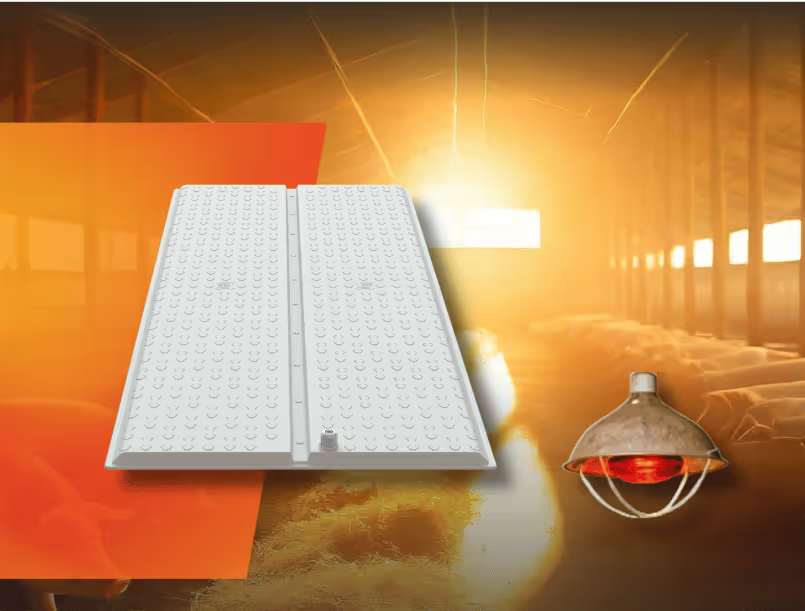
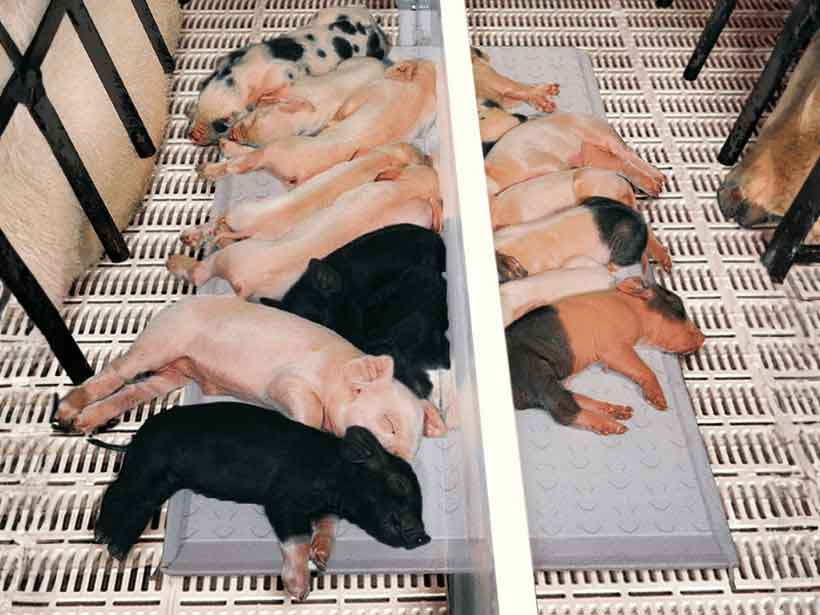
For IHT Group, these new mechanistic findings reinforce the importance of barn‑level climate solutions that keep boars safely within their thermoneutral zone 365 days a year. Cooling technologies, like IHT Cooling Pads for pigs, reduce body and scrotal temperature, along with integrated controls that respond quickly to heat waves, are no longer “nice‑to‑have”; they are key tools for preventing the inflammatory and metabolic cascades documented in today’s research. As producers look to secure long‑term fertility in a warming world, combining evidence‑based nutritional support with robust, Energy‑efficient cooling systems offers the most promising path to protecting boar performance, and the productivity of the entire herd.